
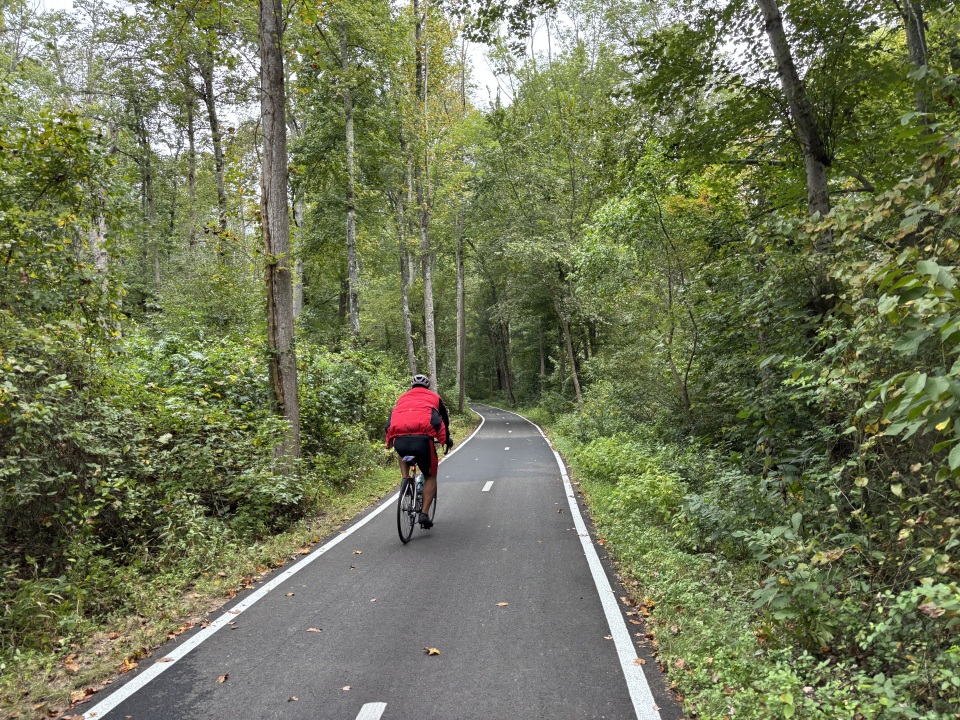
Shared-use paths are a type of low-stress facility separated from vehicle traffic, of which Bikeways can fund the design, minor retrofit or construction.
Calling all bike enthusiasts: the application for Fiscal Year 27 Bikeways funding is now open!
Established in 2012, the Kim Lamphier Bikeways Network Program (“Bikeways”) funds the design and building of bicycle routes across Maryland. The Bikeways Program supports projects that fills gaps in the state’s bicycle network and completes connections to work, school, shopping and transit. Since 2012, the Maryland Department of Transportation has awarded over $42 million to 256 projects through the Bikeways Program, named in honor of the tireless bike advocate Kim Lamphier.
MDOT is Serious About Bike Safety
New bike paths reduce the level of traffic stress for people biking and rolling by funding routes that are physically separated from cars. These include off-street shared-use paths and on-street protected bike lanes. Low-stress bike routes provide safer and more comfortable opportunities for people to walk, bike and roll, attracting more bicyclists of all ages and abilities.
In fact, one guideline for project selection includes providing an essential safety upgrade with new, comfortable bike routes. These safety improvements protect people biking and rolling by separating them from busy roadways. It creates a safer environment for everyone. Bikeways projects must meet two or more of the Program’s six guidelines for selection, detailed on this website.
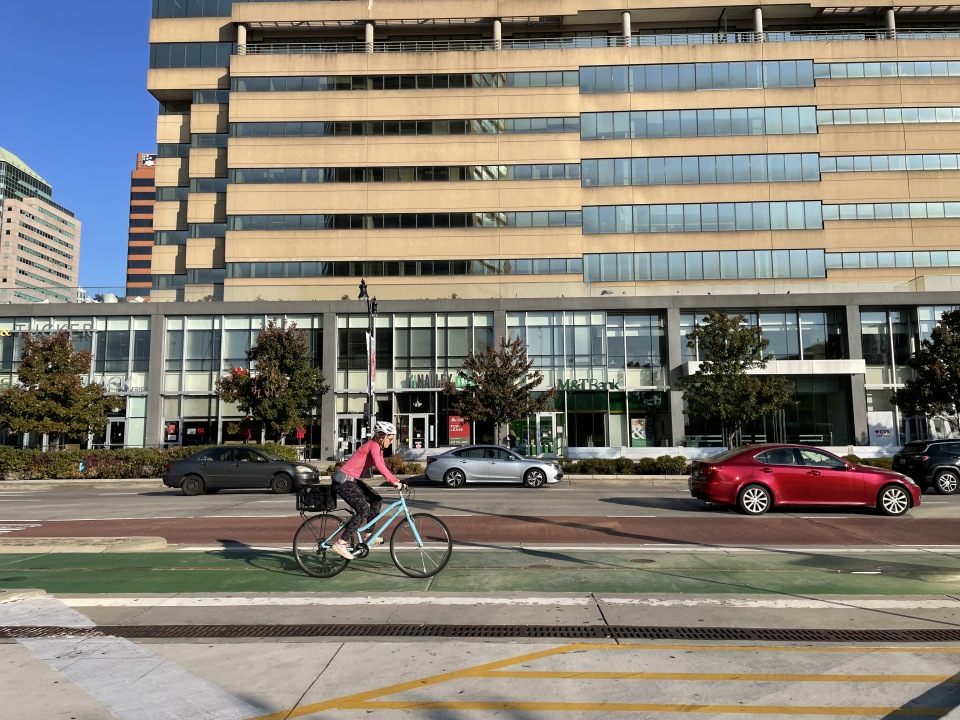
Existing bike lanes can be made protected facilities through the Bikeways Program’s minor retrofit grants for vertical delineators like flex posts and pre-cast concrete pills.
Bikeways Projects help create Complete Streets
Bikeways projects build on our vision of MDOT’s Complete Streets Policy. We strive to create a safe and connected transportation network for everyone. The Complete Streets Policy provides an overall guide for MDOT and Bikeways is no exception. Starting this year, Bikeways projects on roads owned by MDOT are required to tell us how they support our Complete Streets Policy. This guidance is available on the Bikeways webpage.
The Bikeways Program may also fund Complete Streets intersection changes that improve safety for everyone, including changes that help people walking. These “quick build” changes qualify as minor retrofit Bikeways projects and are typically temporary improvements that can be evaluated for future permanent changes.
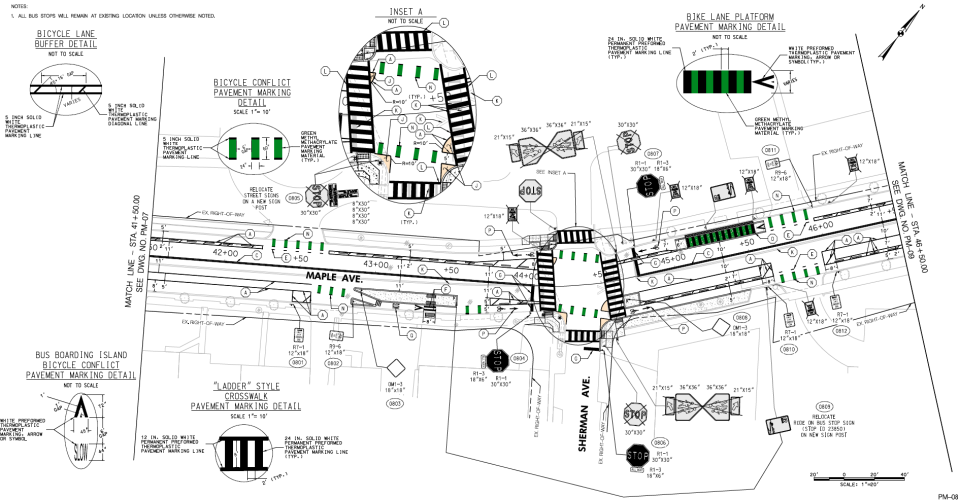
Bikeways projects adhere to the SHA’s Bicycle Policy and Design Guidelines, which closely follow the AASHTO Guide for the Development of Bicycle Facilities.
Bikeways + TAP = A Perfect Match
A Bikeways award can serve as the local match to certain federal grants, including the Transportation Alternatives Program (TAP). In these cases, the federal TAP award funds 80% of the total project cost and the Bikeways award funds 16%. This match from Bikeways reduces the local contribution to 4%. For large projects, this arrangement helps stretch local, state and federal dollars and reduces the burden on local jurisdictions to get transformative bike projects built.
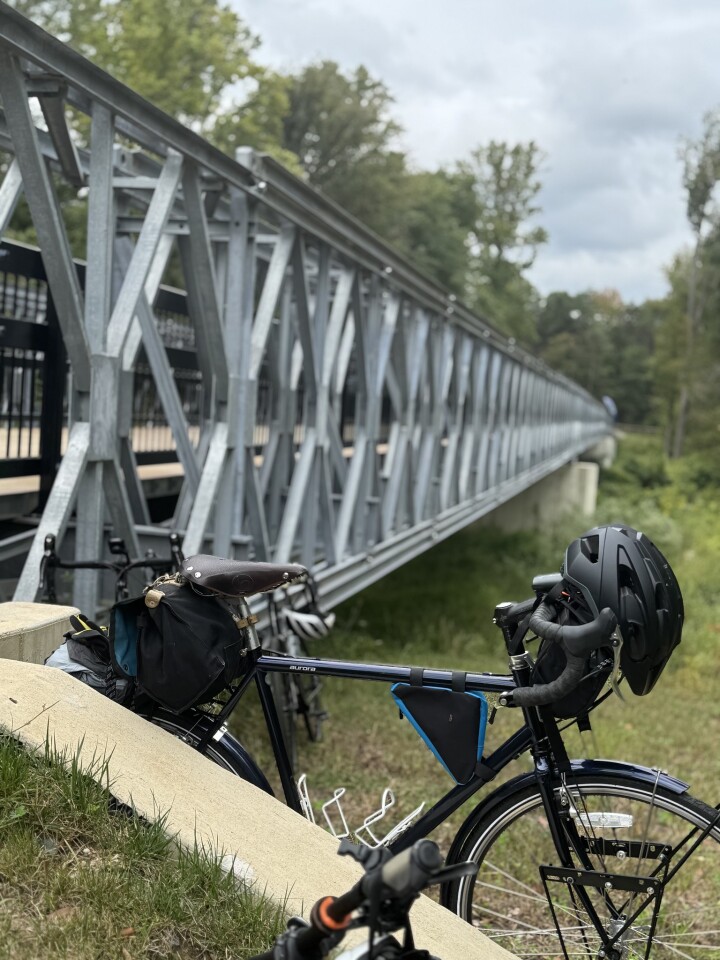
The WB&A Bridge over the Patuxent River was funded by Bikeways and TAP awards, among other funding sources. Photo credit: Antoine RJ Wright
Apply for Funding
MDOT invites you to apply for FY27 Bikeways funding before May 31. Grants aren’t limited to government agencies. Non-profit organizations can apply, too. We plan to award up to $2 million in funding and will announce FY27 awards in the fall. MDOT encourages you to review the many resources available on the Bikeways Program webpage, including the program overview, Complete Streets guidance, project eligibility map and more.
Quinn Wallace is an Active Transportation Planner at the Maryland Department of Transportation.