
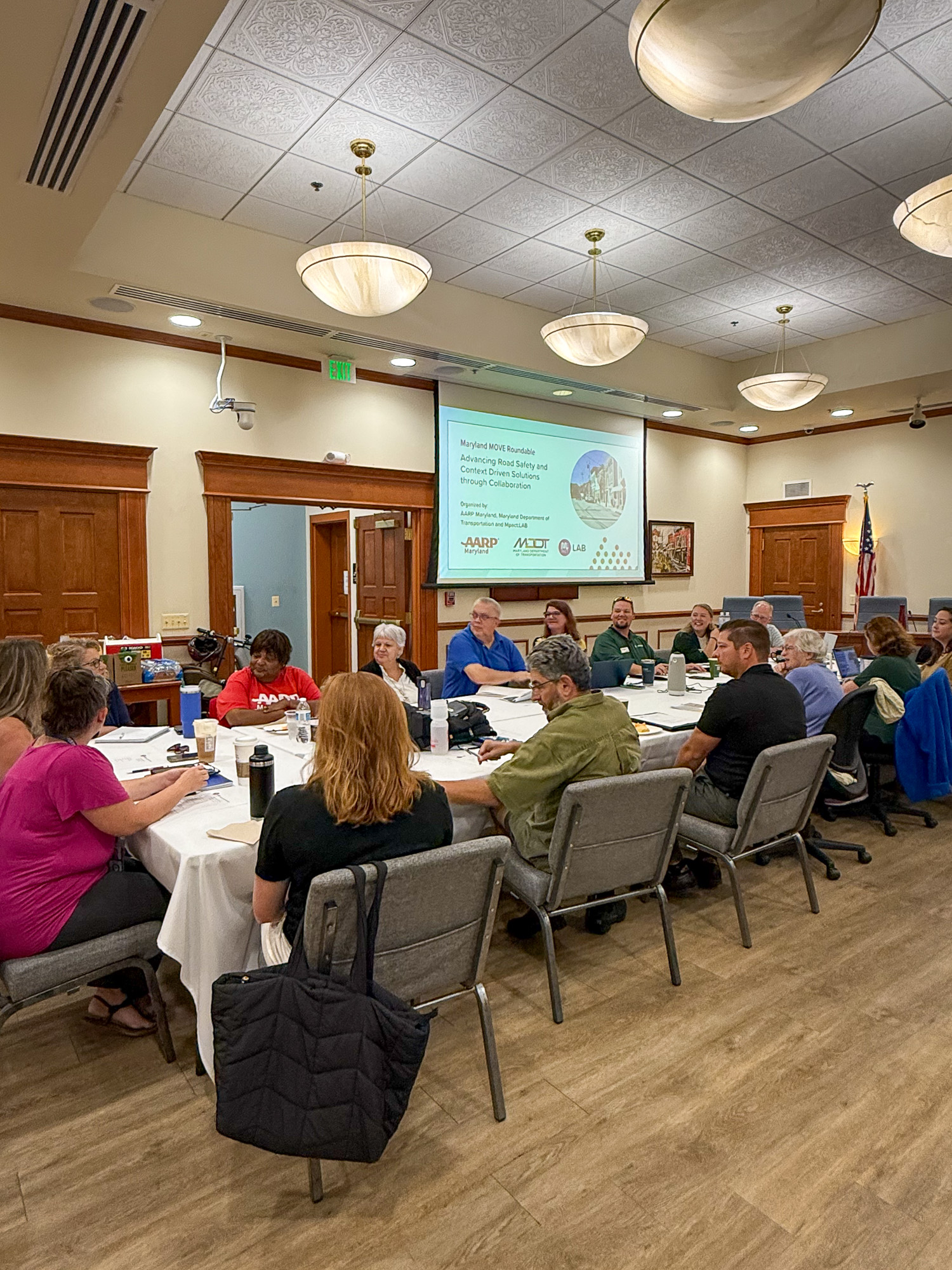
The Maryland Department of Transportation, with support from Mpact Mobility and AARP, convened the 2025 MOVE Roundtable. (MDOT)
This year, conversations about creating transportation systems where everyone can move freely, safely and with dignity took center stage as the Maryland Department of Transportation’s Office of Active Transportation and Mobility with support from Mpact Mobility and AARP, convened the 2025 MOVE Roundtable. The MOVE Roundtable, a program developed by Mpact, brings together a small group to dig into a local priority issue through the MOVE lenses: Mobility, Opportunity, Voice and Equity.
Over four workshops, 30 community members, civic leaders and transportation professionals – along with more than a dozen organizations – came together to explore the transportation challenges and opportunities facing older adults in Maryland suburban and rural areas.
The series introduced participants from Mt. Airy and La Plata to Maryland’s Context Driven framework, which helps state and local agencies apply flexible, Complete Streets-based design strategies that respond to community needs. Complete Streets is an approach to planning, designing and building streets that enable safe access for all users — including pedestrians, people biking or using e-scooters, transit riders and drivers. Each session immersed participants in practical applications of Complete Streets policies by examining mobility options and safety improvements tailored to Mt. Airy and La Plata.
It also connected participants with the people who shape the services and infrastructure residents rely on every day, strengthening relationships between local communities and statewide agencies.
Empowering Communities with Tools and Knowledge
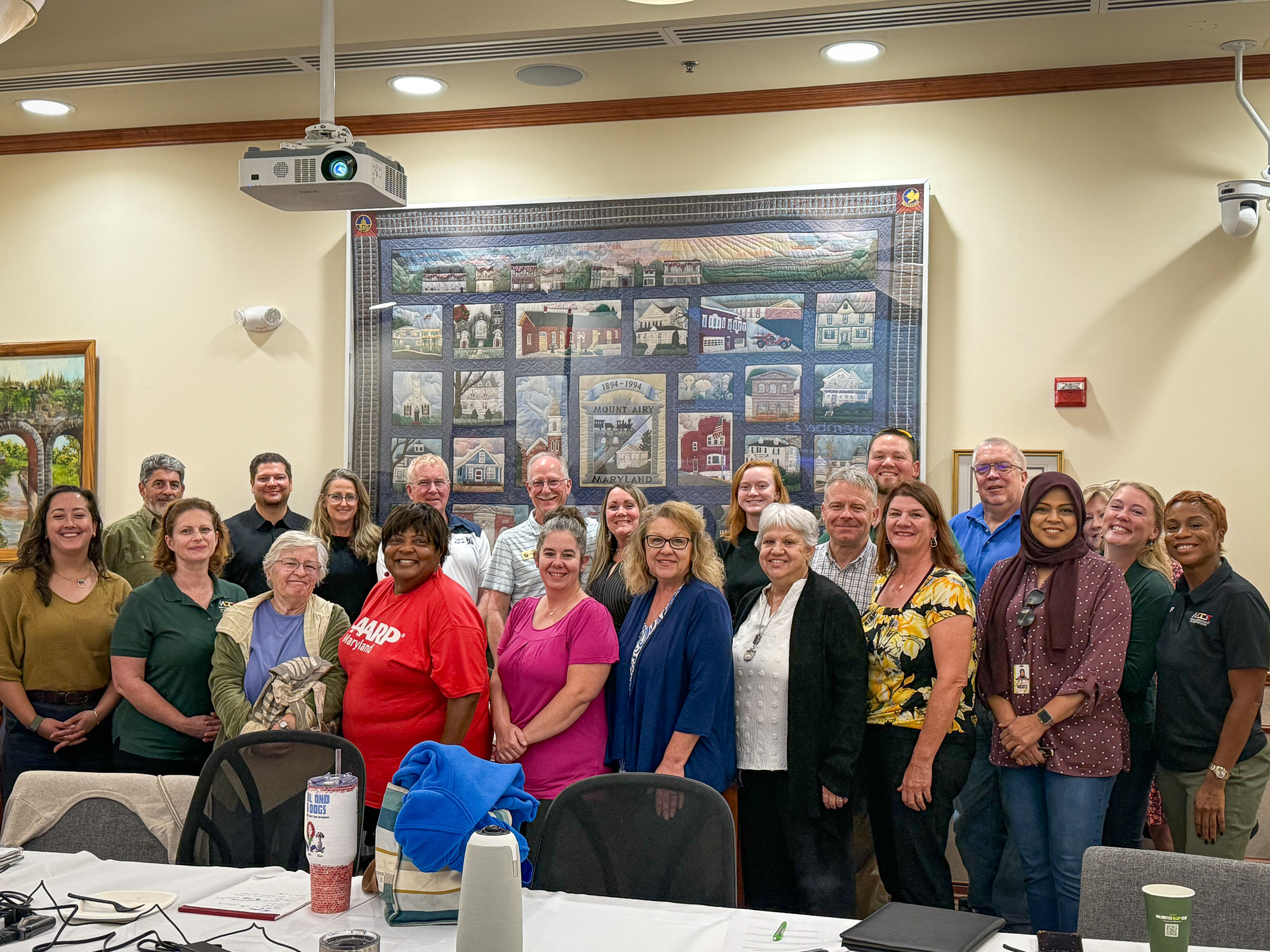
Participants gather following the first in-person session in Mt. Airy.
Throughout the four workshops, MDOT and its partners shared practical tools, technical assistance and resources designed to help communities advance their own transportation goals. Several themes came up again and again —needs that many Maryland communities share:
- Better coordination between jurisdictions
- Easier access to information about transportation projects
- Safer crossings and better walkability
- Stronger first/last-mile connections to transit
Each two-hour conversation also provided new insights for me personally in my roles as a director, pedestrian and caretaker. Some of the key takeaways included:
- Development projects often spark community engagement, especially in suburban and rural areas.
- While many transportation resources exist, residents often find them hard to locate or navigate.
- Maryland benefits from a wide network of organizations and advocates—building relationships with these champions helps communities move projects forward.
- Even when places look similar on paper, their needs are not the same. Mt. Airy and La Plata each face unique challenges shaped by their demographics, geography and development patterns.
- For many older adults, transit can be more convenient than rideshare services. Continued state and federal support is essential to expand local and regional transit options.
- When it comes to Complete Streets, communities are most eager to learn about pedestrian safety and infrastructure.
Looking Ahead and Taking Action
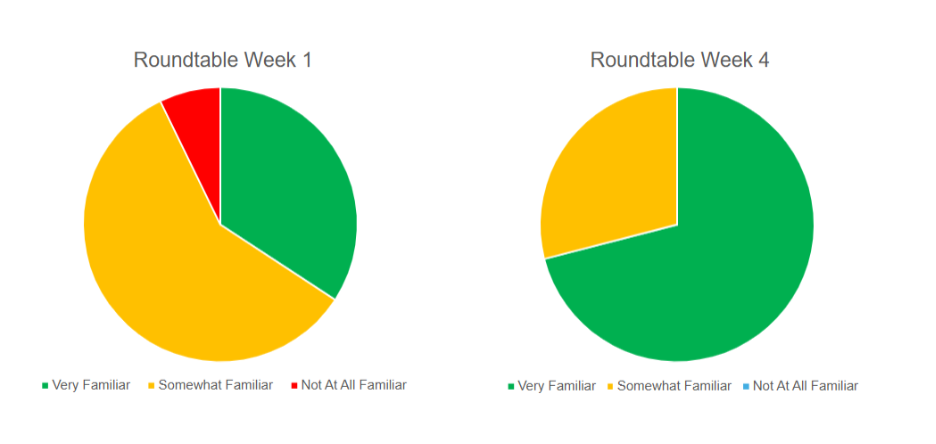
At the start of the series, we asked participants how familiar they were with Maryland’s Complete Streets Policy. By the final session, participants reported feeling far more knowledgeable about the Policy, and equipped to use it to strengthen mobility choices in their own communities.
But our conversations don’t end with the workshops. We encouraged participants to:
- Share what they learned with neighbors and local leaders.
- Use MDOT’s Inclusive Mobility Toolkit
- Engage older adults and community groups
- Apply for grants that support safety, accessibility and connectivity.
Thank You to Our Partners
We are grateful to all participants for their enthusiasm, ideas and commitment to improving mobility in Maryland. Special thanks to representatives from:
AARP
Asian American Center of Frederick
Carroll County Department of Citizen Services
Carroll County Department of Public Works
Carroll County Ride With Us
Charles County Department of Planning and Growth Management
Charles County Department of Public Works
Charles County Department of Heath
Frederick County Executive Office
Frederick County Division of Aging and Independence
Frederick County Transit
Maryland Department of Aging
MDOT The Secretary’s Office
Mpact Mobility
Maryland Transit Administration (MTA)
MZ Strategies, LLC
National Rural Transportation Assistance Program (RTAP)
State Highway Administration (SHA)
Town of La Plata
Town of Mt. Airy
Tri-County Council for Southern Maryland
Through continued collaboration, Maryland can advance a future of mobility that reflects the MOVE framework — where every person has Mobility, Opportunity, Voice and Equity in how they travel and live.
For more information on MDOT’s mobility resources and to read the Mpact Lab Report, please visit www.mdot.maryland.gov/completestreets.
Kandese Holford is director of the Maryland Department of Transportation’s Office of Active Transportation and Mobility.