
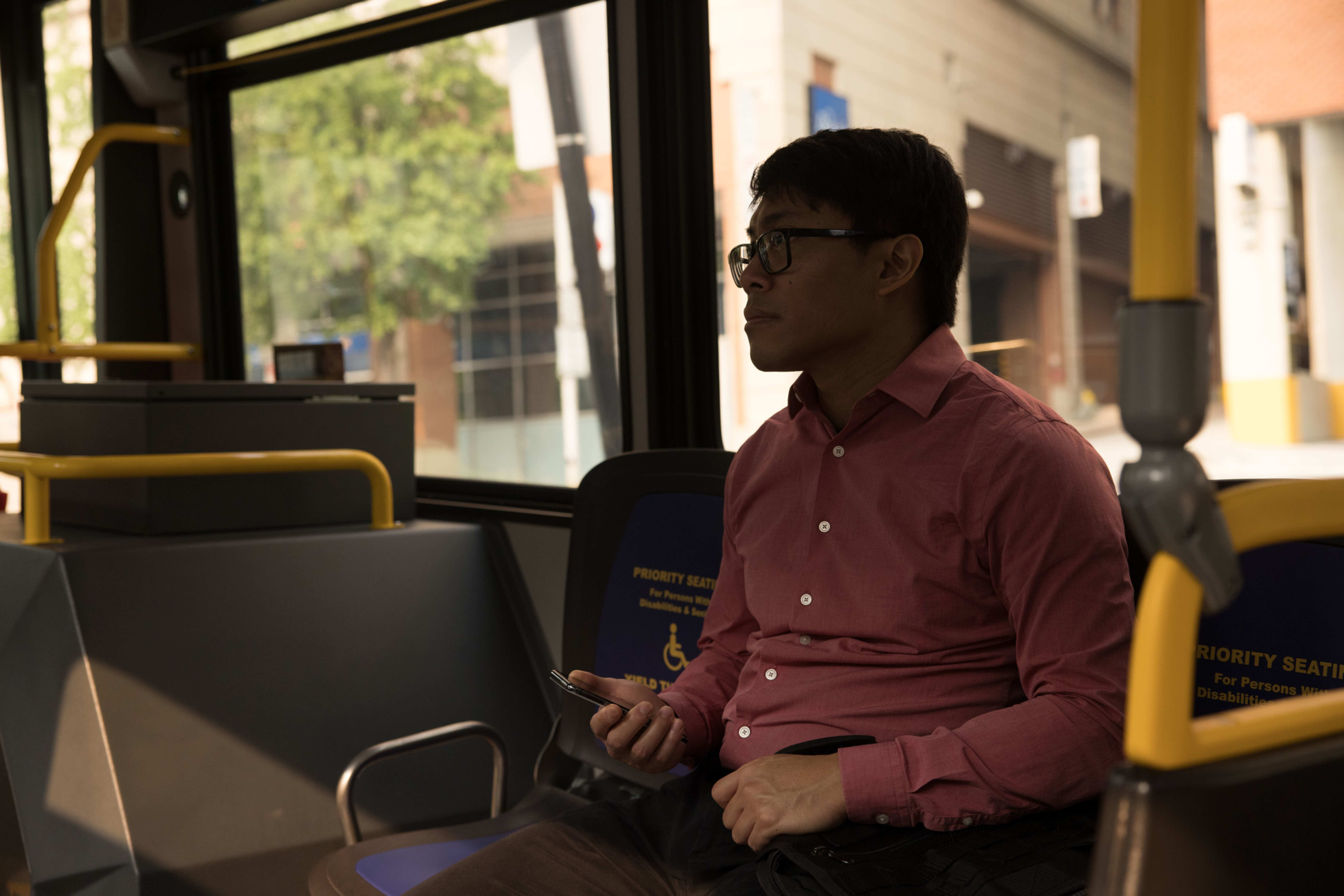
Man commuting on a MTA bus
A worker from Dundalk hurrying to get to work in Glen Burnie.
A Baltimore area parent rushing to pick up their child from daycare.
A person in South Baltimore dashing to an appointment.
A student hustling to get to class.
The increased congestion and longer commute times are part of the daily impacts commuters and communities face with the loss of the Francis Scott Key Bridge. These impacts have become a new reality for Baltimore area commuters as the region approaches two years without this critical structure. While the region and the state will not be made whole until the new bridge opens to travel, MDOT recognizes, empathizes and understands these impacts.
“MDOT is committed to providing relief to commuters and has taken several steps to reduce congestion across the Baltimore region,” said Vinn White, MDOT’s Senior Advisor for Policy and Innovation. He is coordinating traffic demand management efforts across the Department and said, “we want to increase convenience for commuters and improve road safety while minimizing impacts to local communities.”
Below are some newly implemented programs and projects that are helping to save Baltimore commuters time and money.
Commuter Choice
In the past year, Commuter Choice Maryland launched several incentive programs as part of the included carpools and vanpools. Another program encouraged first-time transit users to try out Baltimore’s buses and trains. The transit incentive is available to new riders during the first week of each month and adds free transit passes to their CharmPass account. These reward programs are aimed at promoting and incentivizing alternative options to driving alone. So far more than 63 vanpools, 19 carpools and more than 221 transit riders have taken advantage of these incentives.
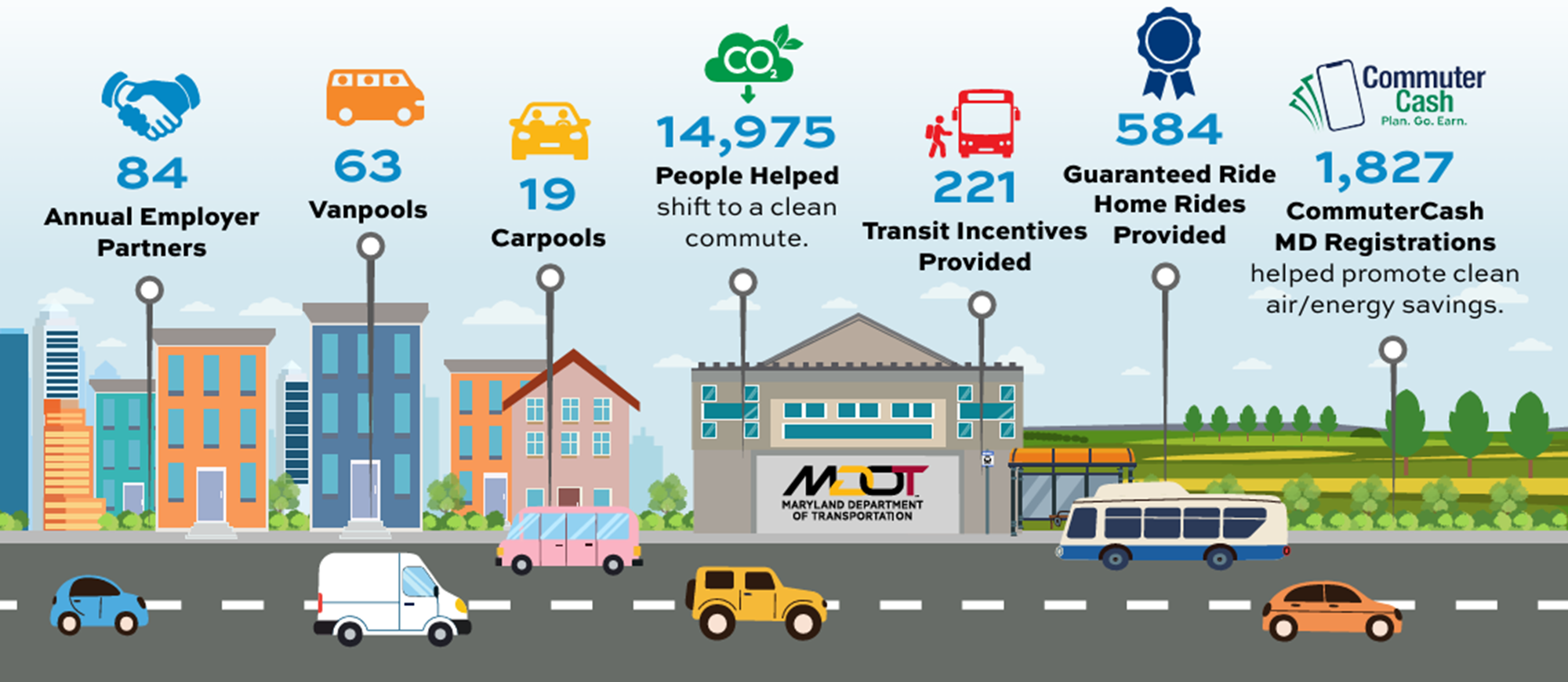
Commuter Choice Maryland by the numbers for 2025.
“Everyone can make a difference in easing congestion by trying carpool, vanpool, transit or even just shifting your work schedule at least one or two days per week,” said White.
CommuterCash is a mobile application that can be used in tandem with all of these incentives, where commuters can earn points towards rewards for their commute. MDOT is also working directly with businesses to provide commuter benefits to their employees.
MTA
MTA is supporting commuters in the region by providing free access to the Transit Royale App which provides real-time arrival information for all MTA buses, Commuter Bus, MARC Train, Metro Subway and Light Rail service. Tens of thousands of MTA riders use the Transit app to track their rides in real-time, get arrival times and plan their trips.
Earlier this year, MTA launched a new MARC Train Student Fare program for high school, college and vocational students to save 50% on MARC train service. Whether students are headed to campus, a job or internship, the program will get them there for half the price. According to the latest data through February, students in the program have purchased nearly 4,800 tickets.
SHA
SHA is working closely with Baltimore City and Anne Arundel and Baltimore counties around signal timing. This coordination between the state and local government adjusts traffic lights to help keep traffic flowing. SHA is also working to provide real-time traveler information enhancement to its CHART website. This information will further help commuters plan their trip.
MDTA
Along I-95 in Baltimore City, MDTA has repainted interstate lane markings to better manage travel. The refresh provides drivers with a clearer view of their travel lane which helps keep traffic flowing around the Fort McHenry Tunnel.
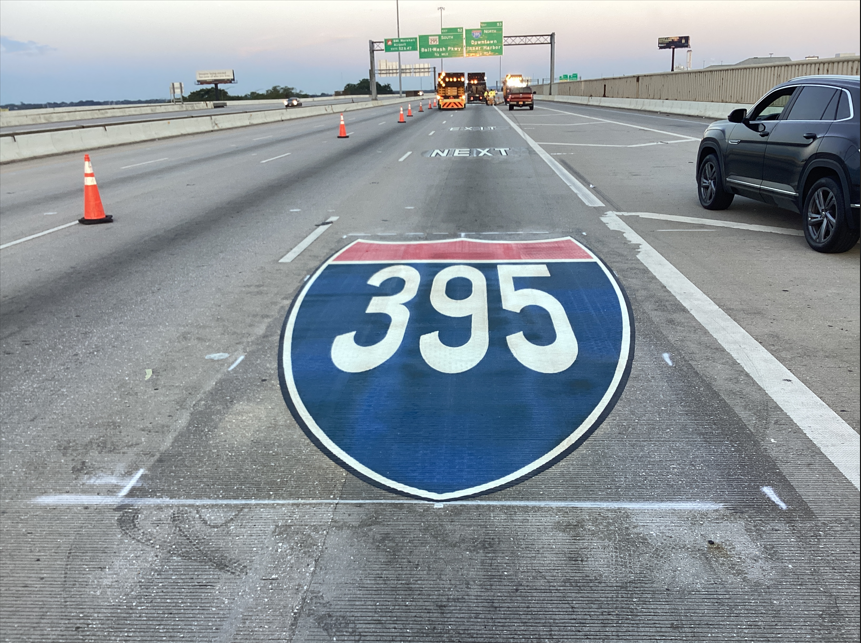
New pavement markings on I-95 to help keep traffic flowing around the Fort McHenry Tunnel (MDTA)
“Combined, all these programs and projects work together to help people shave off a few minutes from their commute and provide relief to the thousands of commuters across the Baltimore region,” said White.
Commuters and employers that are interested in learning more about MDOT’s incentives for alternative commute options can visit Baltimore Commutes for all the resources.
Meredith Devereux is the Director of Public Affairs for the Maryland Department of Transportation