
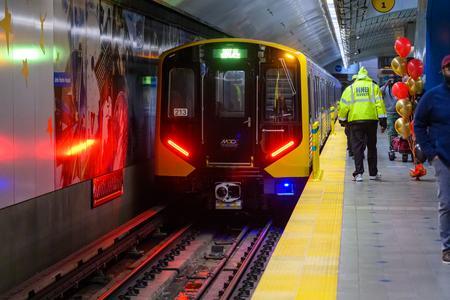
MTA’s new Metro Subway railcar (MDOT/David Trozzo)
I have always enjoyed trying new things, even when I am a little nervous about it. So, when the new Baltimore Metro Subway railcars started operating, I knew I had to ride them. The difference is evident the moment you step inside. The interiors feel bigger, brighter and more comfortable, and you can tell that much effort has gone into improving accessibility features.
My whole trip from Johns Hopkins to Lexington Market and back was smooth and surprisingly calm. The ride was a comfortable one that dropped me right into the pulse of Baltimore.
These new railcars are just one piece of a bigger picture, and Maryland’s leaders are pushing forward bold transit plans that go well beyond new trains. Governor Wes Moore has also continued to stress how essential transportation is to Maryland’s future.
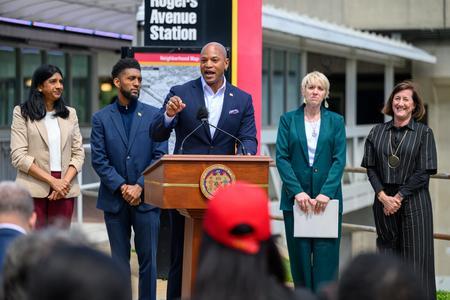
Governor Moore announces the Baltimore Region Transit-Oriented Development Strategy with Lt. Governor Aruna Miller, Baltimore City Mayor Brandon Scott, Maryland Transportation Secretary Katie Thomson and MTA Admistrator Holly, May 6, 2026. (MDOT/David Trozzo)
Earlier this month, the Governor reiterated that commitment by announcing the Moore–Miller Administration’s next move to push Transit‑Oriented Development across the Baltimore region, an effort aimed at strengthening the state’s economy and helping reduce housing costs. At a press conference with Baltimore City Mayor Brandon Scott and state transportation leaders, the Governor introduced the new Baltimore Region Transit‑Oriented Development Strategy and shared that the state is beginning the process of bringing in a development partner for the North parcel at the Rogers Avenue Metro Subway Station.
“We have said from the beginning that if this is going to be Maryland’s Decade, it has to be Baltimore’s Time,” said Governor Moore. “Part of making that real means making sure our investments in Baltimore’s Metro and Light Rail System lead to opportunity — opportunity to live near transit, opportunity to strengthen communities near transit and opportunity to create work, wages and wealth near transit. That is what it means to leave no one behind.”
The Transit‑Oriented Development Strategy is the latest step in the Moore–Miller Administration’s push to improve how people move around the Baltimore region. Alongside this work, the Maryland Transit Administration is moving ahead with its nearly $1.4 billion Light Rail Modernization Program, which will bring new, modern low-floor vehicles and upgrades at light rail stations, systems and maintenance facilities all along the line from Hunt Valley to BWI Thurgood Marshall Airport.
Another of the most talked-about initiatives of the Moore-Miller Administration is the MARC Student Saver Program, a new student discount program that saves eligible students 50% on one-way or monthly MARC Train tickets. The program, which began this past January, makes it more affordable for students to travel throughout the region and state and expands MTA’s ongoing efforts to enhance rider connectivity.
Maryland is buzzing with new projects and a real sense of momentum right now, and part of that boom is happening right here in Baltimore’s transit system.
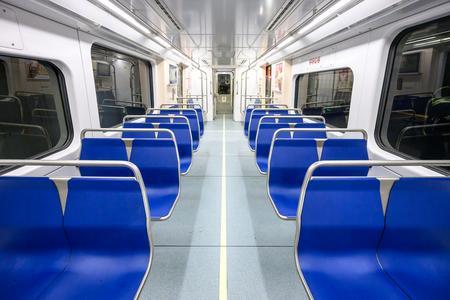
Inside view of MTA’s new Metro Subway railcars (MDOT/David Trozzo)
When anyone asks me about my transit experience, I tell them the new Metro Subway railcars are a reminder that sometimes progress does not always show up loudly, but it happens over time in practical ways.
Victory Anase Momoh is an Intern at the Maryland Department of Transportation.