
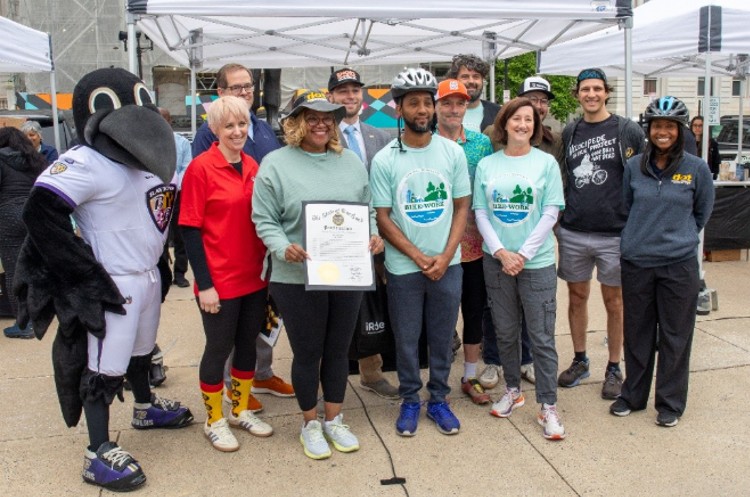
Maryland, Baltimore City and local leaders attend Bike To Work Day in Baltimore City May 2026 (MDOT)
Lives saved. Crashes prevented. Miles of new and reconstructed sidewalks. Safer routes for children to get to school.
These results are part of the Maryland Department of Transportation (MDOT)’s transformational culture shift to implement Complete Streets department wide. This summer marks two years since the policy’s signing and shows how we are delivering on our promise to prioritize the safety of all users, in all projects and at every step of the way.
Delivering Results
Our Complete Streets approach is making a real difference. Currently the number of people killed in crashes in Maryland is down more than 17% year over year. In 2025, fatal crashes dropped by 18%, with the biggest gains among pedestrians and bicyclists. Motorcyclist deaths fell by nearly half, and pedestrian and bicyclist fatalities declined by a third. These results show that targeted investments in high-risk corridors are saving lives—and they underscore why continuing this work matters to all Marylanders. By delivering strategic investments, intentional planning and policymaking, innovative and data-driven roadway improvements and stronger community partnerships, Maryland has made safer streets possible.
Maryland is changing the way we do business when it comes to supporting those who walk, bike and roll, with more than $500 million programmed into our six-year capital plan for active transportation. And we’re not just delivering more projects, we’re reshaping our long-term policies, strengthening our data systems, and building programs that respond to real-world needs. The State Highway Administration’s (SHA) Pedestrian Safety Action Plan reflects that shift by grounding decisions in data, balance and community input so we can target the corridors where improvements will save the most lives. At the same time, SHA’s quick-build program gives us the ability to act fast, test out traffic-calming tools in real conditions and collect feedback before committing to permanent designs.
Realigning for Active Transportation
Active transportation is embedded in MDOT with the establishment of the Office of Active Transportation and Micromobility, forming an Active Transportation Division within SHA and convening Complete Streets Champions who work across MDOT to coordinate Complete Streets initiatives.
Last year the Maryland Transportation Trails Strategic Plan was updated for the first time in 16 years to reflect MDOT’s strengthened commitment to making the statewide trails network safer and more accessible. The plan features an existing trail analysis, policy recommendations and project selection criteria to steer the next era of trail development in Maryland and advance the Complete Streets mission of safety for users of all transportation modes.
MDOT has also prioritized education and outreach to maximize Marylanders’ awareness of and involvement in Complete Streets work. The MDOT in Motion webinar series teaches Marylanders about Complete Streets and multimodal transportation through topics such as micromobility, commuter choice and Safe Routes to School, with sessions in the past year drawing an average of 800 live attendees.
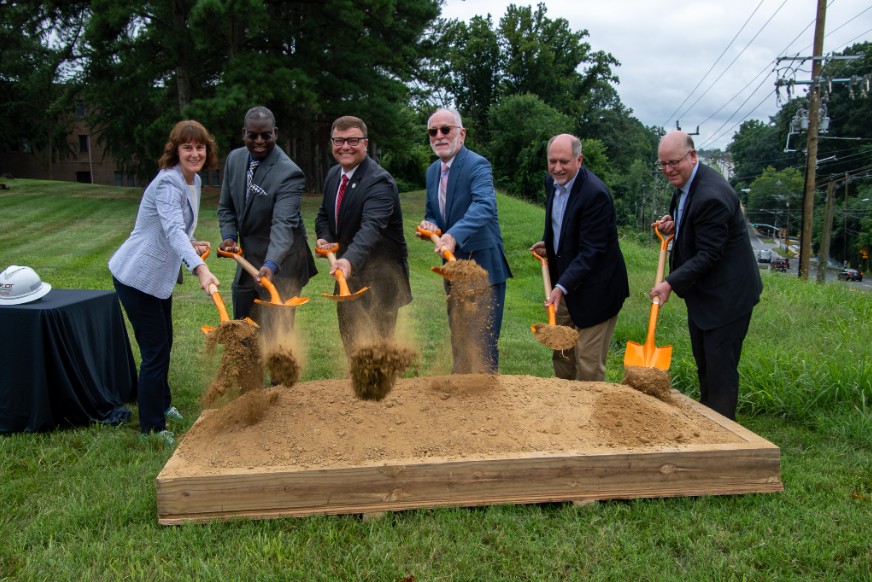
State, Montgomery and Prince George’s County leaders shovel dirt in groudbreaking of state’s first Pedestrian Safety Action Plan Project along MD 650 (MDOT SHA)
Collaboration and Advocacy
Community involvement has been pivotal to the successful first two years of Complete Streets policy implementation. MDOT’s Complete Streets Roundtables provide a space for state, local, regional and community partners to celebrate successes, exchange best practices and collaboratively problem-solve implementation challenges. Moving forward, MDOT will prioritize involving elderly, mobility-challenged and suburban and rural populations in these conversations to ensure an inclusive dialogue.
Stay tuned for the launch a new Active Transportation Data Hub which will provide centralized public access to maps of existing facilities, current projects and important metrics, as well as progress trackers for our guiding plans, including the Maryland Bicycle and Pedestrian Master Plan, Complete Streets implementation and the Maryland Transportation Trails Strategic Plan.
Call To Action
This two-year anniversary is not only a milestone to celebrate the progress that Complete Streets has achieved, but also renewal of MDOT’s commitment to championing safer and more accessible streets in the state of Maryland.
Right now, transportation leaders from across the country are gathering in Baltimore for the American Association of State Highway and Transportation Officials Joint Council on Active Transportation and Committee on Planning Meeting (July 27 – 29). Maryland is proud to welcome colleagues who share a common goal: building a safer, more connected future for everyone. We are also excited to share our best practices, strengthen relationships and learn how we can continue building a transportation system that works for all users.
If you are interested in learning more about active transportation or getting involved in your community, subscribe to MDOT in Motion.
Pavani Durbhakula is an intern with the Maryland Department of Transportation and Kandese Holford is the Director of the Maryland Department of Transportation Office of Active Transportation and Micromobility.