
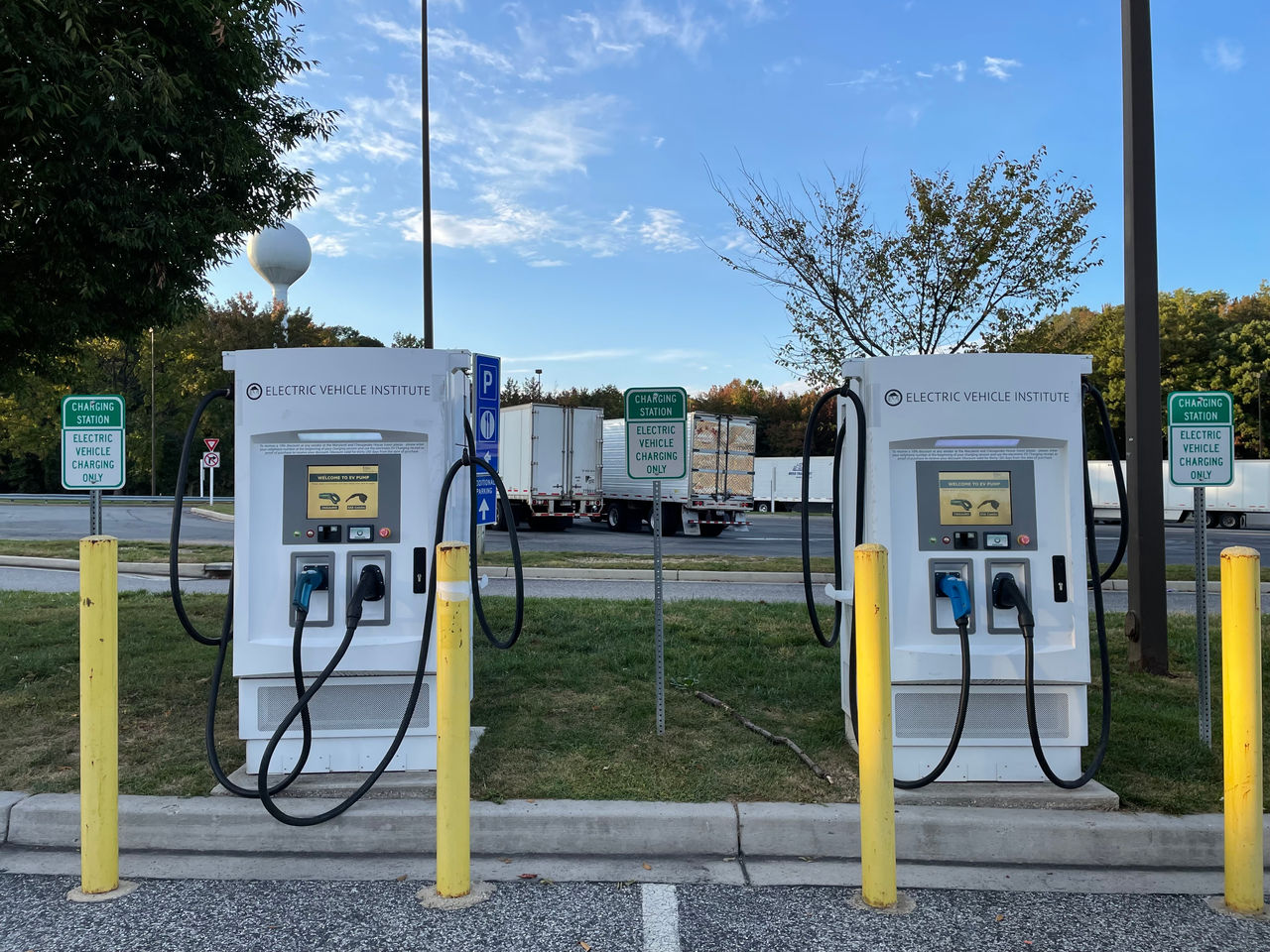
An EV charging station off Interstate 95 (MDOT)
The Maryland Department of Transportation (MDOT) published the state’s first Zero Emissions Vehicle Infrastructure Plan (ZEVIP), innovating how Maryland builds convenient electric vehicle (EV) connections through 2031.
This plan pulls together resources and strategies from multiple state agencies to make driving light-duty EVs accessible through a growing, strategic public charging network throughout the state. MDOT also created the Maryland EV Charging Suitability Tool to support local and statewide infrastructure planning decisions.
We Built this Plan for Everyone
MDOT didn’t create the ZEVIP in a vacuum; it includes feedback from other state agencies, community members and industry partners. The plan primarily looks at a range for how light-duty EV adoption may grow over the next five years and where publicly available charging infrastructure is most needed within Maryland. It uses this to advise how the state and its partners can deploy new infrastructure through 2031 under three EV growth scenarios: low, medium, and high.
Low: Assumes EV sales will remain flat at 10% per year. This scenario does not include federal incentives or implementation of Advanced Clean Car (ACC) II Program.
Medium: Reflects a full federal repeal of vehicle tax incentives under the Inflation Reduction Act (IRA) based on average industry sources. This scenario does not include ACC implementation.
High: Reflects retention of federal incentives and the most lenient of ACC implementation scenarios for maximum pooling, Environmental Justice, historic and early compliance credits.
MDOT also developed the EV Charging Suitability Tool, an interactive GIS-based mapping tool, as part of the ZEVIP to support future deployment of additional publicly available EV Corridor Charging, Neighborhood and Amenity Charging, High-Density Residential Charging and Workplace Charging.
Sparking Connections – Why it Matters
The ZEVIP supports local and statewide decisions on where to place EV charging stations by identifying gaps within the state’s public infrastructure network and areas of opportunity based on the latest available data and community feedback.
Maryland is leading the way for other states who want to implement effective statewide infrastructure for EVs. The plan is also critical to the state’s climate goals and supports Governor Moore’s “Leadership by State Government: Implementing Maryland’s Climate Pollution Reduction Plan” Executive Order issued in 2024.
All this will make using EVs a more viable, convenient option for Maryland drivers and support the reduction of greenhouse gas emissions for the entire state.
The Road Ahead
Maryland is working toward a cleaner transportation future for everyone, with vehicle electrification and a convenient public charging infrastructure network at the forefront. The ZEVIP will help the state achieve these goals. The plan will continue to adapt every three years as new data and information becomes available.
Together, we’re building a sustainable, more connected Maryland. To find more information about ZEVIP and read the plan, click here.
Amanda Hinh is a Zero Emission Vehicle Infrastructure Program Manager at the Maryland Department of Transportation.