
As we are a little over halfway through 2026, the Maryland Department of Transportation (MDOT) has delivered several major projects and made significant progress on several other big projects. These achievements are helping to make Maryland safer, more connected and more sustainable. Below are four accomplishments making an impact across the state.
#4: Maryland’s Zero Emission Vehicle Infrastructure Plan
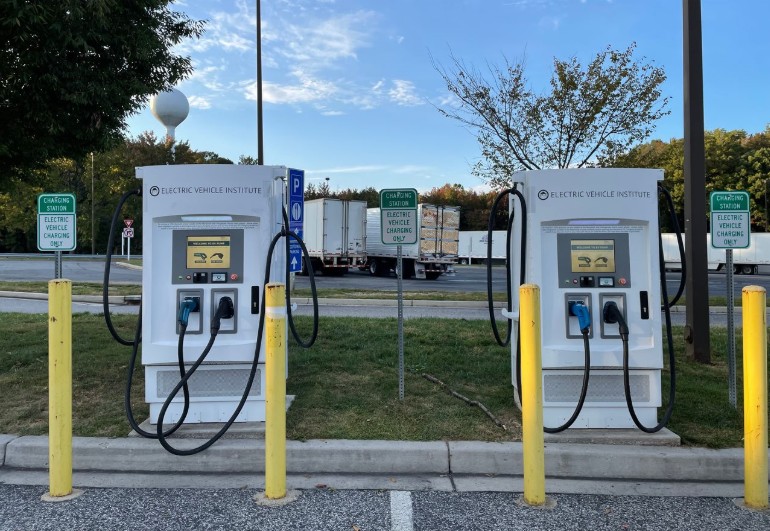
Electric vehicle charging stations off I-95 (MDOT)
As more electric vehicles hit the road, MDOT took an important step by publishing the state’s first Zero Emissions Vehicle Infrastructure Plan (ZEVIP).
The plan establishes a roadmap for expanding charging infrastructure and supporting cleaner transportation options. By identifying future charging needs, the plan helps ensure that residents, businesses and visitors have access to reliable charging stations as electric vehicle ownership continues to increase. To find more information about ZEVIP and read the plan, click here.
#3: Advancing Pedestrian Safety
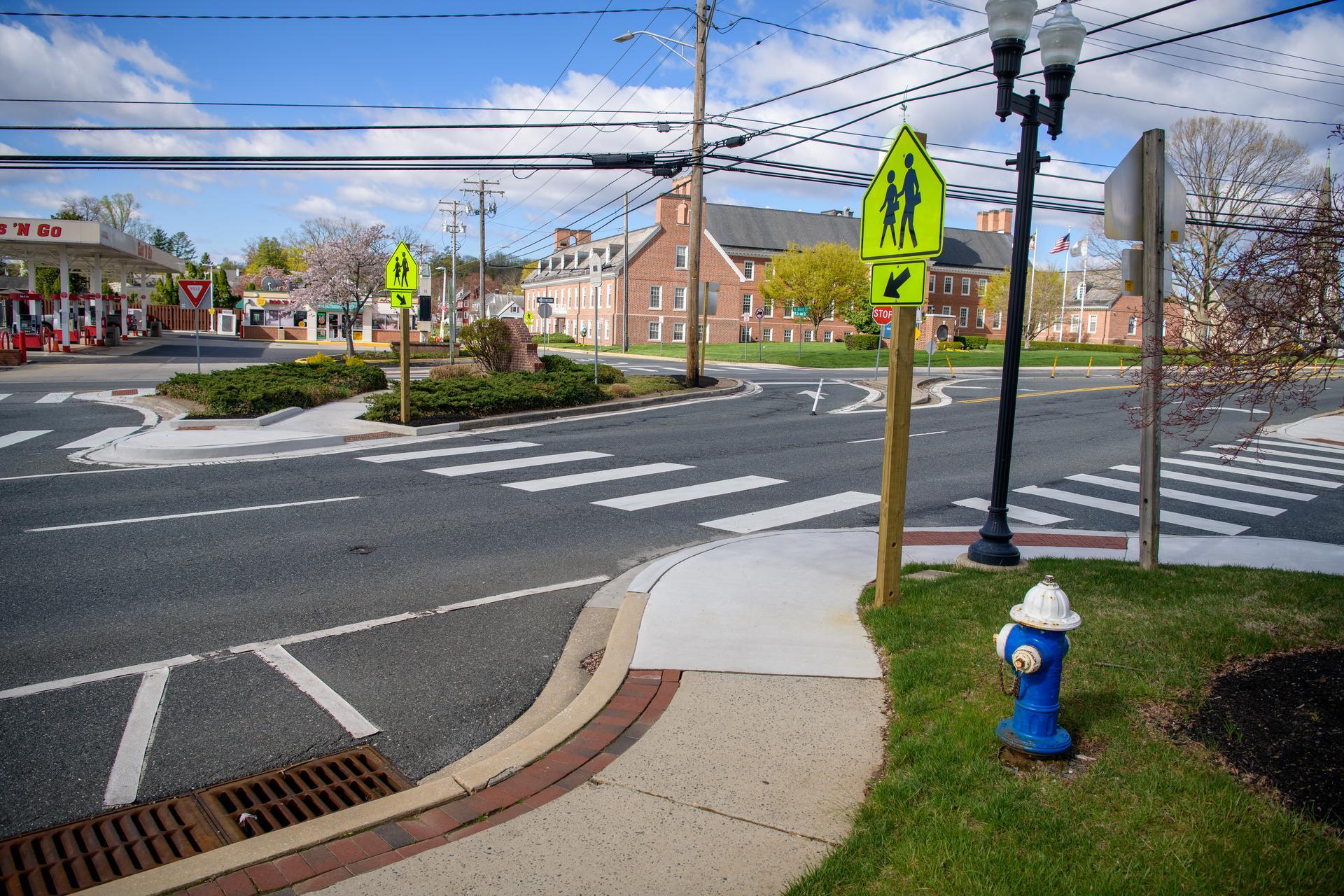
A complete street with sidewalks and crosswalks at the intersection of Main St., Bond St., and E. Gordon St. in Bel Air, Maryland. (MDOT/David Trozzo)
Safety remains at the forefront of MDOT’s mission. Maryland’s Pedestrian Safety Action Plan represents an important step toward reducing crashes and fatalities involving pedestrians. The State Highway Administration has launched planning and design for 13 pedestrian safety projects across Maryland and is currently constructing the first project along MD 650 (New Hampshire Avenue) in Montgomery and Prince George’s County.
Maryland is seeing results from our push to enhance safety. Traffic fatalities fell about 18% statewide in 2025. Motor vehicle crash deaths declined from 582 in 2024 to 480 in 2025, marking the first time fatalities have fallen below 500 since 2014. The largest gains were seen among vulnerable road users. Pedestrian and bicyclist fatalities dropped 33%, from 173 in 2024 to 116 in 2025. Motorcyclist fatalities declined 46%, from 90 to 48 over the same period.
The reductions reflect targeted investments in high-risk corridors and a focus on reducing behaviors most likely to lead to serious crashes.
#2: Double-Stack Rail Service at Port of Baltimore
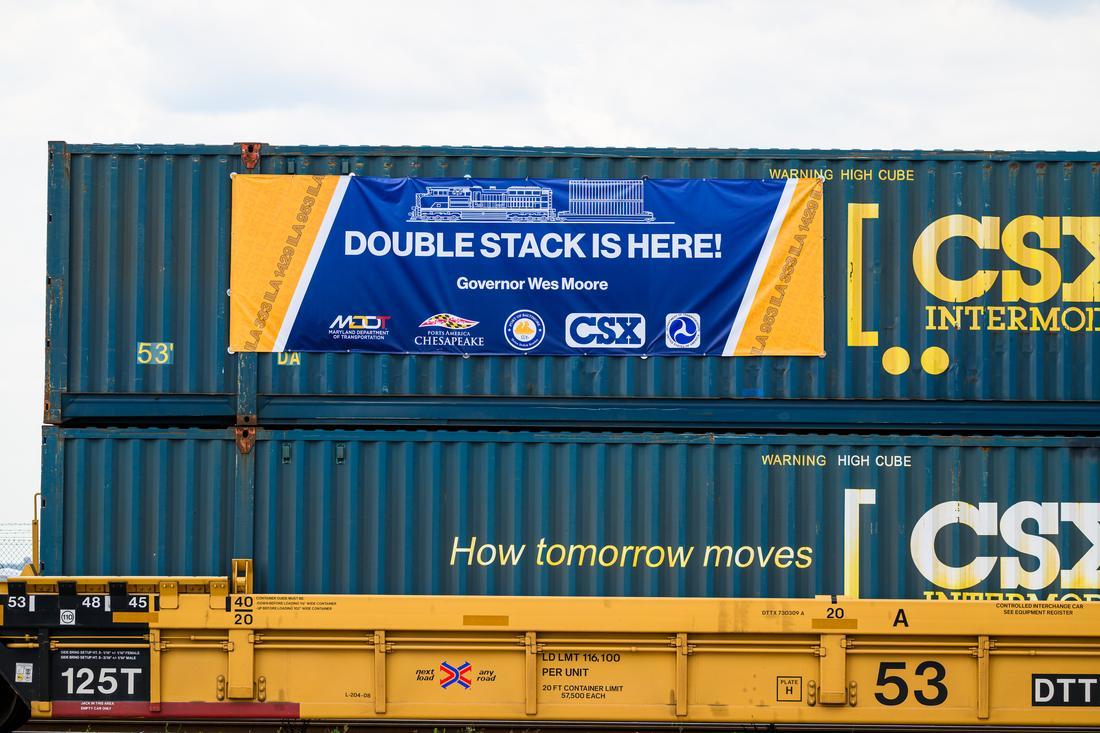
The Helen Delich Bentley Port of Baltimore celebrates the opening of the Howard Street Tunnel to allow double stacked container train cars (MDOT/ David Trozzo)
One of the most transformative freight transportation developments of the year occurred when double-stacked railcars first began passing through the Baltimore corridor in May. This milestone was made possible with the reconstruction of the Howard Street Tunnel. This was a decades-long hurdle for the Port of Baltimore but now it will grow its container business and generate more than 13,000 construction and supply chain jobs.
The impact extends beyond rail transportation. The refurbished rail line will bring some 160,000 extra containers into the Port of Baltimore each year and establish Baltimore as a connection point for double-stacked cargo for the East Coast and Midwest.
It is expected to reduce highway congestion and traffic, improve air quality, improve port efficiency, support job growth and generate $1 billion in economic activity. Over the next three decades, federal estimates suggest approximately 1.2 billion truck miles could be eliminated from highways and save more than 137 million gallons of fuel.
#1: The Purple Line
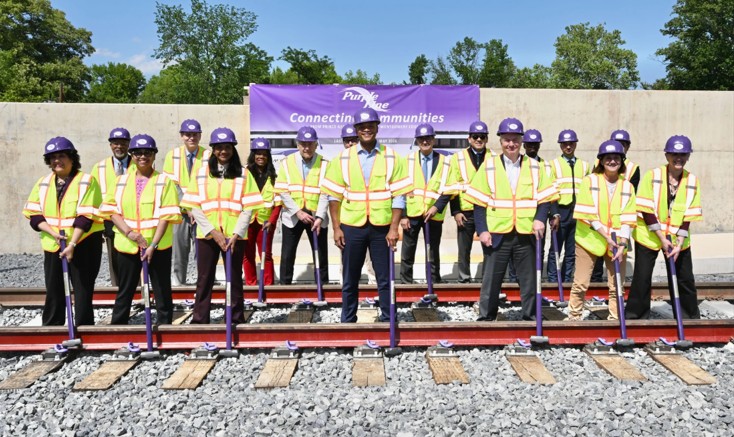
Governor Moore, Lt. Governor and other federal, state and local officials install the final rail segment for the Purple Line (Governor’s Office)
Taking the top spot is the Maryland Transit Administration’s Purple Line. Governor Wes Moore, Lt. Governor Aruna Miller, Maryland Transportation Secretary Katie Thomson, MTA Administrator Holly Arnold and others installed the final segment of rail in May. When finished, the 16-mile light-rail system will provide service and connect communities across Montgomery and Prince George’s counties.
The Purple line will provide direct connections to Metrorail Red line (Bethesda and Silver Springs), Green line (College Park), and Orange line (New Carrollton); MARC (Silver Springs, College Park and New Carrollton); Amtrak (New Carrollton); and local and regional buses.
The Purple line represents more than two decades of planning, community engagement, environmental review and construction. The light rail will serve as one of Maryland’s most ambitious and successful transportation investments in recent in history. To get the latest updates, visit the website.
While 2026 is only halfway complete, these accomplishments highlight diverse ways MDOT is working to improve transportation and safety across Maryland.
Jena Queen is an intern with the Maryland Department of Transportation.