
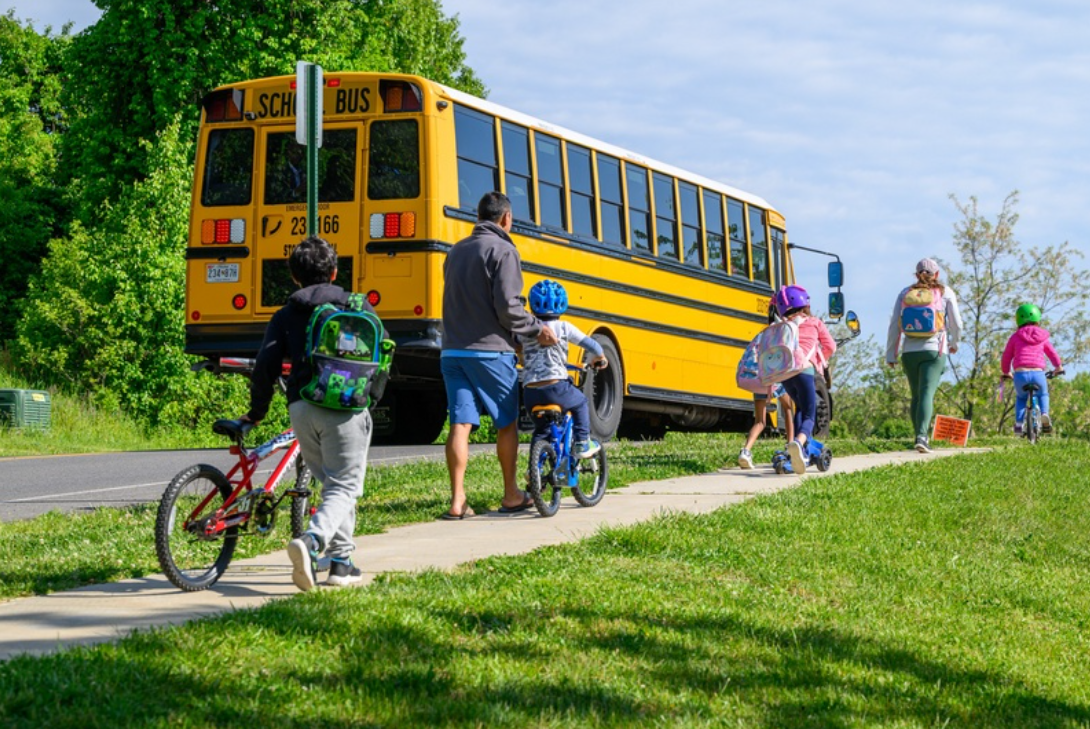
Students walk and bike to school in Ellicott City for national Bike to School Day in May 2026. (MDOT/David Trozzo)
Walking along a busy road. Crossing a major intersection. Coming across missing or damaged sidewalks. These are some of the issues students face when getting to and from school.
As students and parents get ready to head back to school, the Maryland Department of Transportation has been hard at work trying to make the trip to and from school safer. Through the national Safe Routes to Schools program, we provide communities with the tools needed to make this happen.
To improve the program in Maryland, we recently launched the Safe Routes to School Coordinator Pilot program. Baltimore City and Anne Arundel, Howard and Prince George’s counties are the first members who will have Safe Routes to School Coordinators. Coordinators work closely with local schools. These coordinators will run student safety programs and help choose which safety projects get built first.
“The establishment of Safe Routes to School Coordinator grant position is a vital catalyst for transforming how our students and families experience daily travel,” said Sam Snead, Director of Transportation for Anne Arundel County. “By bridging the gap between community planning, education, and active encouragement, this role turns the goal of safer streets into an everyday reality. It empowers families to choose walking, biking, and alternative modes with confidence, reducing local congestion, improving air quality, and instilling lifelong healthy habits that benefit the entire community’s well-being. Hiring Kaylen Pak to fulfill this role under the leadership of Tanya Asman is a great step forward in this process.”
Montgomery County already uses this approach. The county runs Maryland’s most comprehensive Safe Routes to School program.
Study Time
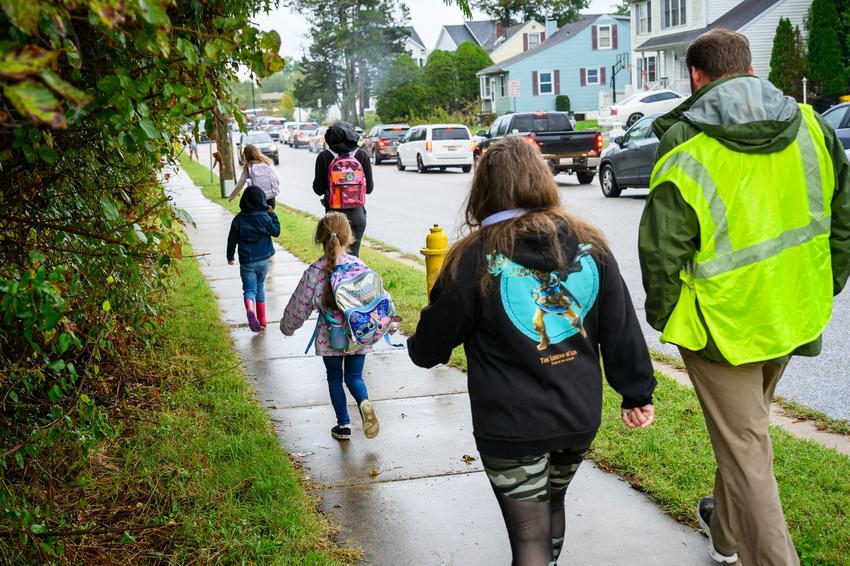
Students walking in Glen Burnie during the Walk to School event in October 2025. (MDOT/David Trozzo)
In 2024, we took a closer look at how to strengthen the Safe Routes to School program. The Department found several challenges. The challenges included a rise in unqualified grant applications, fewer non-road projects and aligning goals with local groups. These findings pointed to a proven strategy used by other states and Montgomery County— hiring Safe Routes to School Coordinators.
Using this approach, local partners can apply for funds to pay for coordinators. The State Highway Administration runs the program. The money can cover 80% of the salary for a Safe Routes to School coordinator.
“At the Safe Routes National Partnership we recently released our 2026 Making Strides State Report Cards which show how states are supporting active kids and communities through funding, programs, and policies,” said Kori Johnson, Senior Program and Engagement Manager, National Safe Routes Partnership. “One of the biggest areas of opportunity in Maryland is investing in Safe Routes to School programs and staff. This pilot marks a huge step in how we address youth traffic safety and encourage more students to walk, bike, and roll to school statewide.”
Group Project
The Moore–Miller Administration is committed to helping children. This commitment made it possible to build a strong statewide partnership for the Safe Routes to School Coordinator Pilot. We joined with the State Highway Administration, Motor Vehicle Administration’s Maryland Highway Safety Office, Maryland Department of Planning, Maryland Department of Health and the Maryland State Department of Education to form a work group.
The work group made a Safe Routes to Schools toolkit for local partners. The toolkit is a guide for newly hired Safe Routes to School Coordinators. It is also a resource for anyone looking to start or strengthen Safe Routes to School programs in Maryland.
“Safe Routes to School is one of the most effective ways to improve traffic safety for youth and boost the number of students walking, biking, and rolling to school,” said Johnson. “It is exciting to see widespread enthusiasm for this program and so many partners getting involved. The collaborative approach sets us up to make a lot of progress in creating safer streets for kids.”
Looking Ahead
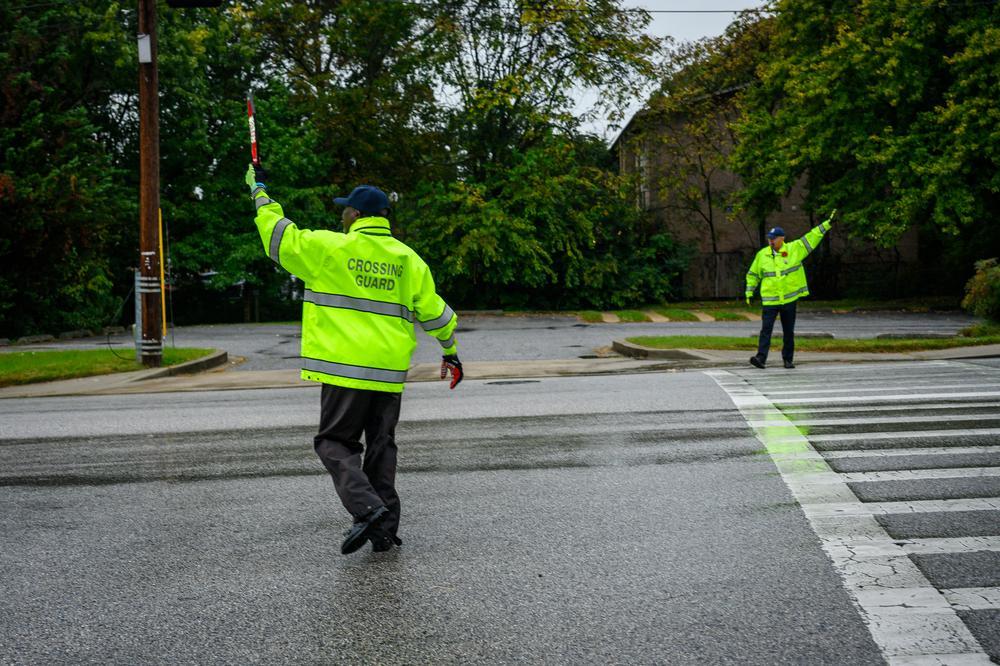
Crossing guards in Glen Burnie stop traffic for students during Walk to School day in October 2025. (MDOT/David Trozzo)
The Office of Active Transportation and Micromobility plans to continue gathering the work group once a quarter. We are working together to help end child poverty and build a better future for every child in Maryland. The work group also provides support to local Safe Routes to School coordinators and their work.
By working together, Maryland is trying to make every child’s path to school safe, supportive and connected to a brighter future. You can learn more about MDOT’s Safe Routes to School program on our website. For more information about the national Safe Routes Partnership, click here.
Meg Young is the Deputy Director of the Office of Active Transportation and Micromobility with the Maryland Department of Transportation.