
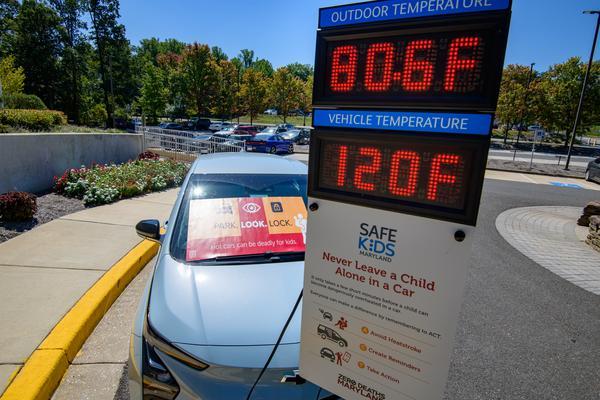
The Motor Vehicle Administration’s Maryland Highway Safety Office Pediatric Vehicular Temperature Display showing a twenty-point temperature difference was recorded once the sun cleared the shade. (MDOT/David Trozzo)
Every year, dozens of young people are lost to a completely preventable danger: pediatric vehicular heatstroke. Whether due to a change in routine, a momentary distraction, or a child gaining access to an unlocked vehicle, these heartbreaking incidents happen across the country—including right here in Maryland.
What Is Pediatric Vehicular Heatstroke?
Pediatric vehicular heatstroke occurs when a child’s body overheats after being left—or becoming trapped—inside a vehicle. It can happen unintentionally when a caregiver forgets a child is in the back seat or when a child climbs into an unattended, unlocked vehicle while playing.
Children are especially vulnerable because their bodies heat up three to five times faster than adults. Heatstroke begins when the body’s core temperature reaches 104°F, and death can occur at 107°F or higher.
Minutes Matter: How Fast a Parked Car Turns Deadly
Never underestimate the danger of a hot car. A parked car can heat up by 20 degrees in just 10 minutes—even with the windows cracked. While most pediatric vehicular heatstroke deaths occur in the summer months, they can happen any time of year—even when outside temperatures are as low as 60°F. It’s never safe to leave a child alone in a vehicle, even just for a few minutes.
The Numbers Are Real — And Heartbreaking
On average, 37 children under the age of 15 die each year in the United States from vehicular heatstroke. Nationally as of June 11, 2026, 6 children between the ages of 2 months and 4 years old have already lost their lives. Maryland lost 2 children to vehicular heatstroke in 2025.
In every single case, the death was preventable.
Protect Their Lives: Simple Steps to Prevent Tragedy
Parents and caregivers can take simple, proactive steps to help ensure no child is ever left behind:
- Stop. Look. Lock: Always check the back seat before locking your vehicle.
- Place a reminder: Keep a personal item you won’t forget—such as your phone, bag, or shoe—in the back seat to prompt you to check before exiting.
- Create a childcare check-in plan: Ask your childcare provider to call if your child doesn’t arrive as expected.
- Use available technology: Many vehicles and car seat manufacturers now offer alert systems and reminder apps. After-market devices are also available to provide an audible rear-seat reminder.
- Keep vehicles locked and keys out of reach: Never leave doors unlocked. Teach children that vehicles are not play spaces.
What If You See a Child Alone in a Vehicle?
Everyone has a role to play. If you see a child alone in a car:
- Call 911 immediately.
- Act if the child appears to be in distress—you may need to break a window to rescue them.
- Maryland’s Good Samaritan laws provide protection for individuals who intervene in emergency situations to save a life.
- Remember, a broken window can be replaced. A child’s life cannot.
Know the Law in Maryland
In Maryland, it is illegal to leave a child under the age of 8 unattended in a vehicle without the supervision of a reliable person at least 13 years old.
Every Death is Preventable. Every Life is Worth Protecting.
Pediatric vehicular heatstroke is 100% preventable. With a simple routine and community awareness, we can protect Maryland’s children from a completely avoidable tragedy.
Let’s work together to raise awareness. Share this message with friends, family, and neighbors. A simple reminder could save a life. For more information about bringing a safety event to your community, visit https://ZeroDeathsMD.gov/resources/.
This message is part of the Maryland Department of Transportation’s Serious About Safety initiative—our commitment to protecting every life on Maryland’s roads and in our communities.